
 English
 French
 German
 Italian





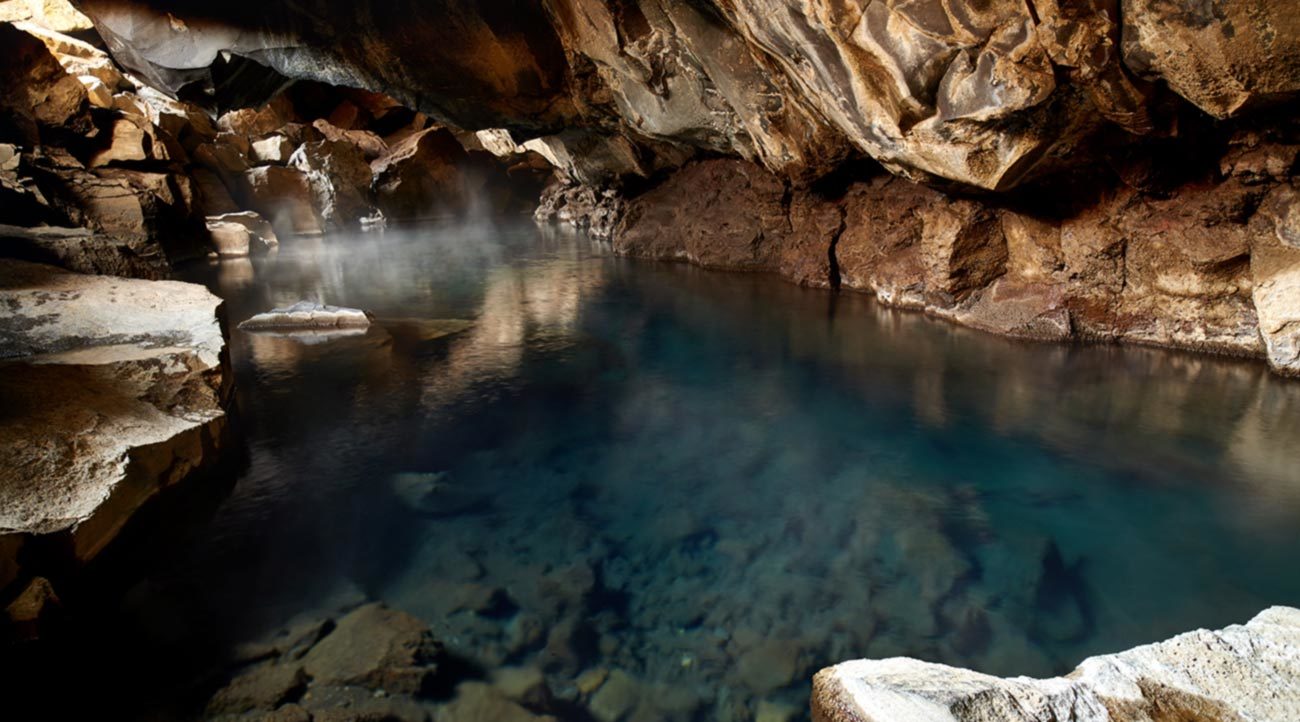
We Went Deep Underground for this Amazing Cave Shot
GLACIER CAVINGSpelunkers rappel 300 feet (90 meters) into the Greenland ice sheet. Glacier caves such as these form when seasonal meltwater or geothermal vents cut fissures and channels through an ice sheet. Because they are made of ice, glacier caves can be quite unstable and present unique challenges to spelunkers.
PHOTOGRAPH BY CARSTEN PETER
KARST CAVE, CHINALooking like the set of a science fiction movie, China’s Reed Flute Cave is bathed in purple-blue light. Created by an underground river more than a half million years ago, this highly accessible karst formation is one of the region’s most popular tourist attractions. But during World War II the cave served a different purpose—it doubled as an air raid shelter.
PHOTOGRAPH BY RAYMOND GEHMAN
LECHUGUILLA CAVEA caver is dwarfed by calcite columns that stretch some 50 feet (15 meters) to the top of Tower Place in Lechuguilla Cave. Located in Carlsbad Caverns National Park in New Mexico, this famous cave attracts spelunkers from all over the world.
PHOTOGRAPH BY MICHAEL NICHOLS
CAVE PEARLSMineral deposits in caves can create amazing shapes, such as these chocolaty-looking cave pearls. These unique spherical formations are created in cave pools when layers of calcite are slowly deposited around a grain of sand or dirt.
PHOTOGRAPH BY STEPHEN ALVAREZ
CAVE DIVINGCave divers explore a flooded chamber of Florida’s Diepolder Cave, 250 feet (76 meters) below the Earth’s surface. Named after the man who originally owned the land, Diepolder Cave is located on Sand Hill Boy Scout Reservation near Brooksville, Florida.
PHOTOGRAPH BY WES C. SKILES
DEER CAVE IN MULU NATIONAL PARKTwo tiny figures look back towards the entrance of Deer Cave in Mulu National Park in the island of the Borneo’s State of Sarawak. The pair is dwarfed by one of the world’s largest known cave passages, 1.2 miles (1.9 kilometers) long, 500 feet (152 meters) wide, and 400 feet (122 meters) tall,. The massive cave system here draws explorers from all over the world-and is also home to much well-adapted wildlife. Deer Cave alone houses 3 million wrinkled-lipped freetail bats-whose droppings in turn feed countless dung-eating insects.
PHOTOGRAPH BY ROBERT HARDING WORLD IMAGERY/GETTY IMAGES
LAVA TUBESteam rises from the Pacific as molten lava pours from the fiery interior of a lava tube near Kilauea, Hawaii. Lava tubes are created when lava flows through a channel for long periods of time, gradually building natural levees along its sides that eventually connect into an overlying roof. When lava flows stop, the caves may be left behind for exploration. Kilauea’s tubes extend from the ocean to vents on the flank of the Pu’u ‘O’o cone.
PHOTOGRAPH BY PATRICK MCFEELEY
ELLISON’S CAVETheir headlamps dimming in the distance, a group of cavers descends into Ellison’s Cave far under Pigeon Mountain in northwest Georgia. The cave’s “Fantastic Pit,” seen here, is the deepest cave drop in the continental United States at a staggering 586 vertical feet (179 vertical meters).
PHOTOGRAPH BY MICHAEL NICHOLS
KRUBERA CAVEA caver rappels into the first pit of Krubera Cave in the Caucasus Mountains of Abkhazia, a politically disputed breakaway region of Georgia. Krubera is the deepest known cave in the entire world, delving more than 7,188 feet (2,191 meters) underground. Exploring it requires a kind of reverse mountaineering, as teams spend weeks moving from camp to camp while working their way even further into the Earth.
PHOTOGRAPH BY STEPHEN ALVAREZ
HAND OF DOG STALAGMITE IN HANG SON DOONG CAVEA spelunker takes a close look at the Hand of Dog stalagmite in Hang Son Doong Cave. The “Mountain River Cave”, in a remote part of Vietnam’s Annamite Mountains, was first explored in 2009 and boasts caverns large enough to hold a 747 aeroplane. In fact, though explorers have only scratched the cave’s surface it may be the world’s largest with continuous passages as wide as 300 feet (91 meters) stretching more than 600 feet (183 meters) high.
PHOTOGRAPH BY PETER CARSTEN
KAYAKING THROUGH GLACIER CAVESA sea kayaker cruises through a glacier cave carved out from among the giant icebergs of Resurrection Bay near Seward Alaska. Glacier caves are often created by the action of water on ice, though not all end up partially submerged as this iceberg example.
PHOTOGRAPH BY DOUG DEMAREST
WAITOMO CAVES ON NEW ZEALAND’S NORTH ISLANDBoaters on an underground river enjoy a facsimile of the night sky created by a galaxy of glowworms on the roof of the Waitomo Caves on New Zealand’s North Island. The tiny worms have become a rather large tourist attraction, and the caves they call home also boast notable stalactites, stalagmites, and interesting limestone rock formations.
PHOTOGRAPH BY PAUL ZAHL
CAVE OF CRYSTALS IN NAICA, MEXICOA caver explores an otherworldly landscape in the aptly named Cave of Crystals in Naica, Mexico. The ice-cooled suit isn’t just for show, the cave’s 90 percent humidity and high temperatures (118 degrees Fahrenheit, 48 degrees Celsius) could kill a person in half an hour. The 36 foot-long (11 meter-long), 55-ton gypsum crystals here formed in hot, mineral-rich water that filled the cave until local mining operations pumped it dry. Should the mine close and pumping cease, the caves will refill and crystal growth will begin again.
PHOTOGRAPH BY PETER CARSTON
“SNOTTIES”A caver examines single-celled organisms, called “snotties,” that produce a prodigious slime with a nasty kick-an acidic level rivaling battery acid. In Tabasco, Mexico’s Cueva de Villa Luz these bacteria oxidize sulfur compounds that enter the cave from subterranean springs. Sulfur is the basis of nearly all life forms in this toxic-to-humans environment and cavers wear respirators for protection against sulfurous vapors.
PHOTOGRAPH BY STEPHEN ALVAREZ
CAVE OF SWALLOWSLike spiders on silk, cavers begin an eye-popping descent into the Cave of Swallows, a Mexican open-air pit cave whose floor lies some more than 1,200 dizzying feet (366 meters) below-far enough to accommodate the Empire State Building. This free fall plunge is so exhilarating that it has become a major draw for adventure seekers including BASE jumpers. Animals have called it home for far longer and the cave takes its name from the many birds who nest in its vertical walls.
PHOTOGRAPH BY STEPHEN ALVAREZ
THE CHANDELIER BALLROOMThe Chandelier Ballroom is a spot of extreme beauty, where gypsum crystals up to 20 feet (6 meters) long sprout from the ceiling of Lechuguilla Cave in Carlsbad Caverns, National Park, NM. Lechuguilla, one of the world’s premier caves, lies some 1,640 feet (500 meters) below the desert and stretches for some 120 miles (193 kilometers).
PHOTOGRAPH BY MICHAEL NICHOLS
MAMMOTH CAVEMammoth cave is massive, in fact it’s the world’s longest known cave system, but cavers must still be prepared to deal with the many tight spots familiar to all who explore underground. Under south central Kentucky the cave’s linked honeycomb has been surveyed for more than 360 miles (580 kilometers). Experts believe that its full extent might be more than 1000 miles (1600 kilometers).
FANCIFUL FEATURES
Hidden in the darkness of caves, rock formations called speleothems droop from the ceilings like icicles, emerge from the floor like mushrooms, and cover the sides like sheets of a waterfall. Speleothems form as the carbon dioxide in the acidic water escapes in the airiness of the cave and the dissolved calcite hardens once again.
We Bring You All The Crucial Information From Every Field
PHOTOGRAPH BY STEPHEN ALVAREZ
GLACIER CAVEA small “glacier cave” on the north polar ice cap offers a frigid refuge and a wide sampling of exotic ice crystals. While many conventional caves are born from the actions of water and rock they form differently on Arctic’s floating pack ice. Large glacier caves here grow where fissures are cut and subsequently enlarged through the ice sheet, by the actions of seasonal meltwater or geothermal vents.
PHOTOGRAPH BY BORGE OUSLAND
A veil of darkness cloaks the natural beauty of caves. Some are found in cliffs at the edge of the coastline, chipped away by the relentless pounding of waves. Others form where a lava tube’s outer surface cools and hardens and the inside of the molten rock drains away. Caves even form in glaciers where meltwater carves tunnels at the beginning of its journey to the sea.
FORMATION PROCESS
But most caves form in karst, a type of landscape made of limestone, dolomite, and gypsum rocks that slowly dissolve in the presence of water with a slightly acidic tinge. Rain mixes with carbon dioxide in the atmosphere as it falls to the ground and then picks up more of the gas as it seeps into the soil. The combination is a weakly acidic solution that dissolves calcite, the main mineral of karst rocks.
The acidic water percolates down into the Earth through cracks and fractures and creates a network of passages like an underground plumbing system. The passages widen as more water seeps down, allowing, even more, water to flow through them. Eventually, some of the passages become large enough to earn the distinction of “cave”. Most of these solutional caves require more than 100,000 years to widen large enough to hold a human.
The water courses down through the Earth until it reaches the zone where the rocks are completely saturated with water. Here, masses of water continually slosh to and fro, explaining why many caverns lay nearly horizontal.
/vc_column_text]
Keep Yourself Updated By Following Our Stories From The Whole World
The icicle-shaped formations are called stalactites and form as water drips from the cave roof. Stalagmites grow up from the floor, usually from the water that drips off the end of stalactites. Columns form where stalactites and stalagmites join. Sheets of calcite growths on cave walls and floor are called flowstones. Other stalactites take the form of draperies and soda straws. Twisty shapes called helictites warp in all directions from the ceiling, walls, and floor.

try this
/
I just want to say I am just all new to weblog and actually liked you’re website. Almost certainly I’m going to bookmark your website . You definitely have impressive posts. Thanks a lot for revealing your web-site.
February 26, 2018