
 English
 French
 German
 Italian





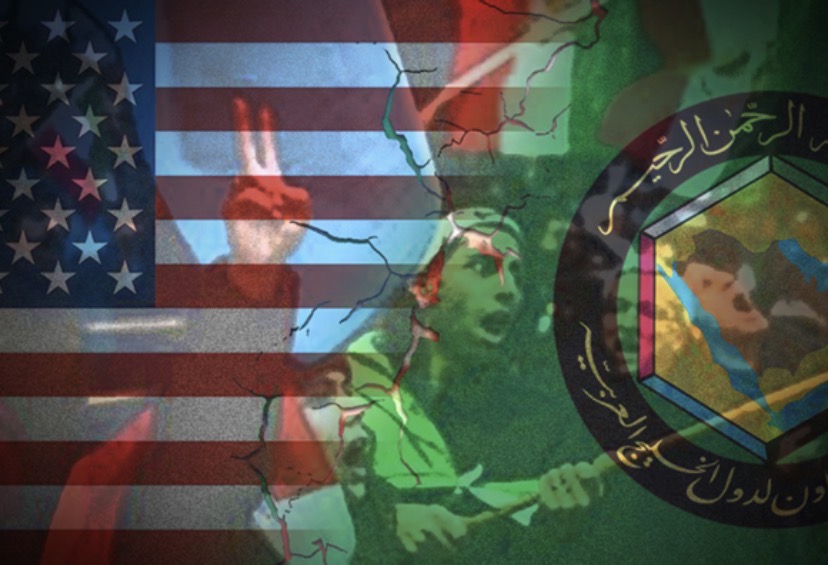
Is This the End of America?

Screenshot
In moments of global tension, history often becomes a battlefield of its own. As conflict narratives intensify around Iran, a bold claim has resurfaced: every nation that fights Iran may win battles—but ultimately loses the war.
It is a powerful statement. But is it true? And more importantly, what does history actually tell us?
The Long Memory of Persia
To understand Iran today, one must first understand Persia—the ancient civilization that predates modern Iran by thousands of years. Unlike many nations that rose and disappeared, Persia has shown a remarkable ability to survive defeat, absorb change, and re-emerge in new forms.
This historical continuity is central to the argument. Iran is not just a country—it is the modern expression of one of the world’s oldest enduring civilizations.
Case Study 1: The Greek Wars – Victory That Didn’t End Persia
During the Greco-Persian Wars (492–449 BCE), Greek city-states like Athens and Sparta famously resisted and defeated Persian invasions. (Encyclopedia Britannica)
At first glance, this looks like a clear Greek victory—and it was. But did it end Persia?
No.
Persia remained a dominant superpower for over a century afterward, continuing to influence regional politics. The Greek victory did not destroy Persia—it merely checked its expansion.
Lesson: Tactical victories against Iran (Persia) have rarely translated into its collapse.
Case Study 2: Alexander the Great – Total Conquest, Temporary Outcome
Alexander the Great achieved what many thought impossible—he conquered the Persian Empire.
Yet, within a few years of his death, his empire fragmented. Persian identity, culture, and political structures resurfaced under successor states.
Over time, Iranian dynasties reasserted control of their lands.
Lesson: Even total military conquest did not permanently erase Persia—it adapted and returned.
Case Study 3: Rome vs Persia – A 700-Year Stalemate
For centuries, Rome—the greatest empire of the ancient West—fought Persian empires (Parthian and later Sasanian).
These wars stretched across generations, with neither side achieving decisive, lasting victory. Some historians consider this one of the longest-running geopolitical rivalries in history.
Rome eventually fell—not solely because of Persia—but Persia remained a defining rival until the very end.
Lesson: Even the most powerful empires struggled to dominate Iran long-term.
Case Study 4: The Arab Conquest – Defeat That Transformed, Not Ended, Iran
In the 7th century, Arab Muslim armies defeated the Sasanian Persian Empire.
This was a true collapse—politically.
But culturally?
Persian identity survived and reshaped the Islamic world itself. Persian language, administration, and culture became deeply embedded in the new Islamic empires.
Lesson: Iran may lose states—but it rarely loses its civilizational influence.
Case Study 5: The Iran–Iraq War – Survival Against the Odds
In the modern era, the Iran–Iraq War (1980–1988) saw Saddam Hussein launch a massive invasion of Iran. (Encyclopedia Britannica)
Despite global backing for Iraq and devastating casualties (over a million deaths), Iran did not collapse. Instead, the war ended in a stalemate, and Iran emerged politically intact.
Even more striking: Iraq itself would later fall into chaos after subsequent conflicts.
Lesson: Iran’s resilience in modern warfare mirrors its ancient past.
So… Is This the End of America?
History does not support such a simple conclusion.
The idea that “every nation that fights Iran collapses” is an overstatement. Greece did not collapse because of Persia. Nor did Alexander’s empire fall solely because of Iran. Rome’s decline had many causes beyond its eastern rival.
However, history does reveal something important:
- Iran is extraordinarily resilient
- It absorbs shocks rather than shattering
- It often outlasts expectations—even after defeat
The Real Pattern
A more accurate conclusion is this:
Nations may win battles against Iran—but defeating it permanently has proven nearly impossible.
Iran’s strength lies less in battlefield dominance and more in:
- Strategic patience
- Geographic depth
- Cultural continuity
- Political adaptability
Final Thoughts
So, is this the end of America?
History says: unlikely—but not for the reasons you think.
The United States is not ancient Greece, Rome, or Iraq. But if history offers any warning, it is this:
Underestimating Iran has never ended well for any power.
The real question is not whether America will collapse—but whether it understands the kind of opponent it is facing.
Because when it comes to Iran, history shows one thing clearly:
The war rarely ends when others think it does.